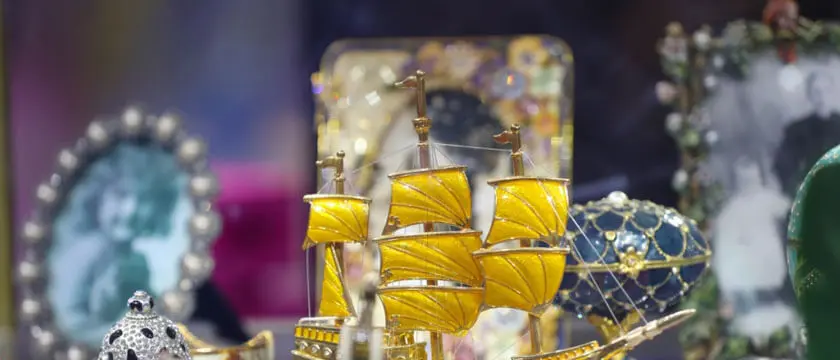
If your brand sells stainless steel jewelry, there is a strong chance it was born in one town in Dongguan. Chang’an—better known as a global electronics manufacturing base—quietly built what industry sources call the world’s largest stainless steel jewelry production and supply base, with thousands of factories spanning Chang’an, Qingxi, and Tangxia towns.
How a Hardware Town Became a Jewelry Capital
According to the Chang’an Economic Development Bureau and reported by Southern Metropolis Daily (2023), the cluster began in the early 1980s when Hong Kong and Taiwan investors set up the first accessory workshops in Chang’an’s Jinsha community. The timing was fortunate: Chang’an’s dominant industries were 3C electronics and hardware molds—exactly the machining capabilities stainless steel jewelry requires.
Stainless steel is far harder to work than traditional zinc alloy or brass. It demands precision stamping, lost-wax casting, CNC machining, and vacuum (PVD/IP) plating rather than simple electroplating. Chang’an already had all of this equipment and expertise serving the electronics industry, so when stainless steel replaced alloy as the world’s preferred fashion jewelry material around 2000, the town pivoted almost overnight.
The numbers today, per the local economic bureau:
- 7,000+ jewelry factories in Chang’an alone, plus over 1,000 accessory and parts shops
- ~100,000 workers employed in the cluster, with annual industrial output around ¥20 billion
- Recognized as one of China’s three major jewelry production and trading centers (alongside Yiwu, Guangzhou, and Qingdao in the association’s framing)
- A long-standing OEM base for international first-tier accessory brands
Why Material Matters: 316L Country
Chang’an’s specialty is 316L medical-grade stainless steel jewelry—hypoallergenic, tarnish-resistant, and swim-proof. The cluster’s full process chain is local: steel strip sourcing, stamping, casting, polishing, stone setting (including wax setting with cubic zirconia), and PVD/IP coating in colors from gold to rainbow. A single factory can take a CAD file to finished plated piece in under two weeks.
Sourcing in the Belt: Practical Playbook
- Skip the trading layer: Many “Shenzhen jewelry companies” on B2B platforms are actually trading offices reselling Chang’an factory output. Ask where the plating line is—if the answer is vague, you are talking to a middleman.
- Verify the plating spec: PVD coating thickness determines whether “gold” jewelry survives six months of daily wear. Specify thickness (0.3–0.5 μm is a common premium range) and request salt-spray test reports.
- Compliance for EU sales: Nickel release limits under REACH are the most common failure point for fashion jewelry. Demand third-party test reports, not factory self-declarations.
- Nearby ecosystem: Shenzhen’s Shuibei district—China’s precious jewelry trading hub—is under an hour away, making combined sourcing trips efficient for brands mixing fine and fashion lines.
When to Visit
The Chang’an International Fashion Jewelry Festival, held alongside the China Processing Trade Expo, is the cluster’s showcase window. Outside fair season, two days on the ground covering Chang’an (stainless steel) and Qingxi (mixed materials) is enough to screen 8–10 factories.
Ready to source jewelry from Dongguan? Explore the Dongguan fashion jewelry cluster, browse verified fashion jewelry suppliers, or Submit your RFQ to get matched with audited factories.