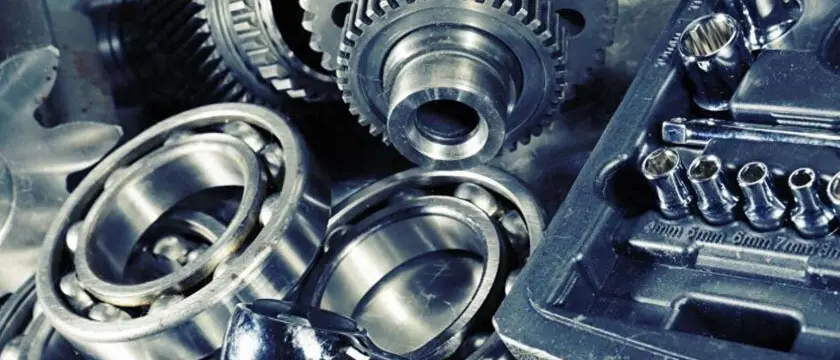
Ruian is a county-level city under Wenzhou in southern Zhejiang, officially titled “China’s Capital of Automobile and Motorcycle Parts.” Local officials, quoted in financial media, describe its defining feature this way: 90% of the parts in a complete vehicle can be sourced within a half-hour drive. With 6,000+ enterprises and annual industry output exceeding ¥90 billion (per China News Service reporting in 2026), Ruian is the most complete auto-parts supply chain of any Chinese county city.
The Numbers
- 6,000+ auto and motorcycle parts enterprises concentrated heavily in Tangxia Town, which hosts roughly 70% of the cluster’s factories.
- 2025 above-designated-size output of ¥62.04 billion, up 15%—a fourth consecutive year of double-digit growth, per local statistics. Exports reached ¥13.3 billion in the same year.
- The cluster claims 25 listed or NEEQ-quoted companies—the highest density for a county-level city in China—plus a deep tier of “little giant” specialist makers.
- From Caixin’s 2026 reporting quoting the municipal publicity department: every part of a car except the engine and body shell can be matched locally, and sourcing them all takes a 30-minute radius.
From Motorcycle Roots to OEM Programs
Ruian’s industry grew from motorcycle components—two decades ago, motorbike parts were 70% of output. That share has fallen to roughly 30% as the cluster upgraded into four-wheelers and, more recently, EV components.
The proof of the upgrade is in the customer list. Ruili Group builds braking assemblies for Mercedes-Benz/Daimler programs; Shenghua Bo supplies wiper systems to SAIC-GM; Mingbo produces chassis components for Geely. When first-tier global and joint-venture OEMs place direct programs with county-city factories, the quality systems—observable in IATF 16949 and CNAS lab certifications held across the cluster—follow.
The newest growth engine is the EV transition: Ruian makers have pivoted into charging components, thermal-management hardware, and lightweight structural parts, with the municipal government explicitly steering investment toward new-energy vehicle supply.
The Sourcing Logic of a 30-Minute Cluster
For buyers, Ruian’s value proposition differs from a port mega-cluster’s. It is not about export volume—it is about completeness and speed:
- Mixed-SKU orders work here. Importers assembling mixed containers of brakes, suspension hardware, electrical connectors, and rubber-metal parts can consolidate across many Ruian factories in a single day of visits, with short domestic freight between suppliers.
- Development cycles shrink. A modified part can move from drawing to trial tooling within days when every process—die casting, stamping, machining, heat treatment, plating, rubber molding—sits in the same county.
- Tier flexibility spans wide. The cluster runs from OEM-program factories with automated lines down to workshops competitive on aftermarket wear parts, letting distributors and brand owners match price points.
There is also a capital-markets signal buyers can use as a shortcut: with 25 listed or NEEQ-quoted companies—the highest density among China’s county-level cities—Ruian’s financial disclosure culture means audited financials, public customer lists, and traceable ownership are easier to obtain here than in less transparent clusters.
What Global Buyers Source Here
- Braking and chassis components: calipers, discs, pads, and assemblies at both OEM and aftermarket grades.
- Wipers, motors, and electrical parts: a traditional strength carried into modern vehicle platforms.
- Rubber-metal and sealing parts: engine mounts, bushings, and gaskets from the cluster’s deep polymer processing base.
- Motorcycle components: still a major line, competitive for global two-wheeler brands and aftermarket distributors.
Sourcing Playbook
- Anchor on Tangxia. About 70% of the cluster is there—staying in Tangxia puts hundreds of factories within a 15-minute radius.
- Ask who they program for. Genuine OEM-tier suppliers will name vehicle programs and show IATF 16949 certification; the answer sorts the cluster fast.
- Use the spring expo. The China (Ruian) International Auto & Motorcycle Parts Exhibition runs each March—455 factories exhibited at the 2026 edition—making it the densest sourcing window of the year.
- Combine with Wenzhou logistics. Ruian sits within the Wenzhou export system; consolidation and export paperwork are routine services local trading companies offer.
Even buyers with no China presence can start remotely: the cluster’s high disclosure density means video audits, third-party inspection bookings, and sample logistics are well-serviced by local agencies accustomed to export buyers.
Ready to source auto parts from Ruian? Explore the Ruian auto parts cluster, or Submit your RFQ to get matched with audited manufacturers.