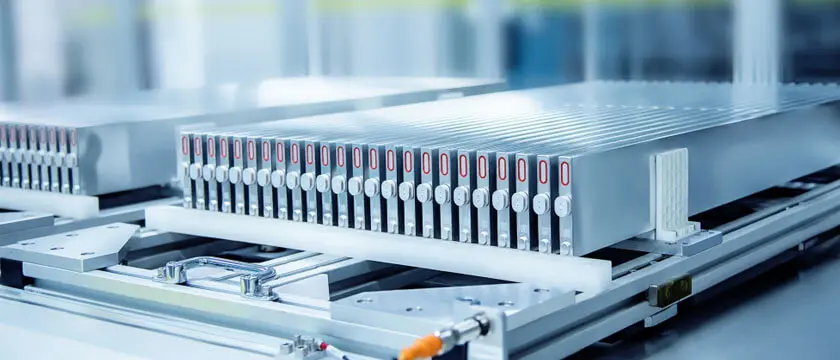
When Guangdong province issued its new energy storage industry guideline in March 2023, it set a headline target: ¥1 trillion in industry revenue by 2027, anchored by a battery manufacturing cluster explicitly built around Guangzhou, Shenzhen, Huizhou, and Dongguan on the east bank of the Pearl River. Three years on, that corridor is the densest energy storage supply chain on Earth—and the default sourcing destination for global ESS buyers.
The Corridor’s Division of Labor
What makes this cluster unusual is how sharply each city specializes:
- Shenzhen is the brain: BMS design houses, power conversion and inverter manufacturers, battery testing labs (SGS, TÜV, and UL all operate major facilities here), and the R&D arms of BYD and hundreds of ESS startups.
- Dongguan is the hands: pack assembly, precision sheet-metal enclosures, busbar machining, and cable harnesses—supplied by its mature electronics manufacturing ecosystem.
- Huizhou is the heart: large-scale cell production, headlined by EVE Energy’s headquarters and gigafactories, within the city’s targeted ¥180 billion storage cluster.
The result is a two-hour drive that covers cells → BMS → pack → enclosure → certification → export through the ports of Yantian and Nansha.
Why This Matters for Buyers
Sourcing a complete ESS product typically means assembling a chain across three time zones. In this corridor, the entire BOM is local:
- Cell matching and testing happens near the cell plants, with same-week re-testing if a batch fails.
- BMS and inverter integration is done in Shenzhen, where firmware engineers sit in the same industrial parks as the hardware.
- Enclosure and thermal design iterate fast in Dongguan, where sheet-metal shops quote in hours.
Guangdong’s electricity market reinforces the cluster’s global relevance: according to CNESA (China Energy Storage Alliance) analysis, Guangdong has consistently posted China’s highest peak-valley industrial price spreads—driving domestic C&I storage demand that funds continuous product iteration.
Sourcing Playbook for the Corridor
- Define which layer you’re buying. Cells (Huizhou/Shenzhen cell plants), packs (Dongguan assemblers), or complete systems (Shenzhen integrators). Mixing layers in one RFQ invites margin stacking.
- Ask who makes the cells. Many “manufacturers” are integrators assembling EVE, CATL, or BYD cells. Both models work—priced accordingly, with cell brand named in the contract.
- Certification is the moat. UN38.3 for shipping, IEC 62619 for industrial use, UL 1973 for North America. The corridor’s advantage is that accredited labs are local; refuse to pay for “certificates in progress.”
- Grade-A verification. Request internal resistance matching data for every cell in the batch—the corridor’s most common quality failure is Grade-B cell substitution.
When to Visit
Shenzhen-hosted storage and solar expos in late summer concentrate the corridor’s integrators. Factory tours should pair a Shenzhen system integrator with a Dongguan pack plant and, if volumes justify, a Huizhou cell facility—three days covers all three layers.
Ready to source energy storage from the corridor? Explore the Shenzhen energy storage cluster, browse verified energy storage suppliers, or Submit your RFQ to get matched with audited factories.