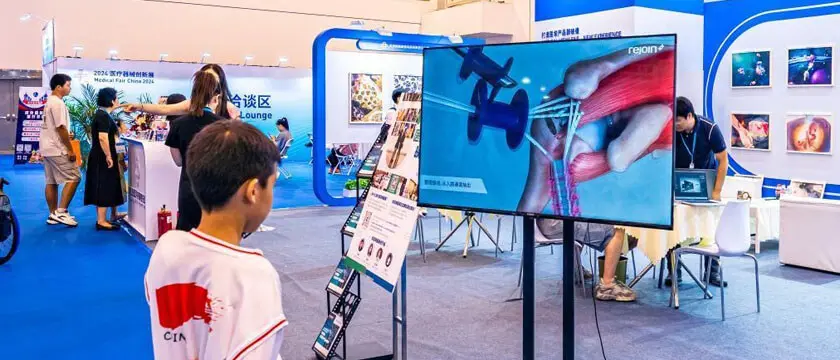
In Jiangsu province’s “one region, one industry” strategy, Suzhou High-Tech Zone is the sole region designated for medical devices. The numbers explain the choice: the zone has aggregated 1,400+ medical device and biomedicine companies with ¥50+ billion in output value, growing 30% annually, anchored by a national-level industrial park built together with the Chinese Academy of Sciences.
A Park Built Around Science
Suzhou’s medtech cluster is not a factory town—it is a research-industrial hybrid. In 2008 the zone brought in the CAS Suzhou Institute of Biomedical Engineering and Technology, and the following year co-built the Jiangsu Medical Device Technology Industrial Park (Medpark) around it. The formula worked: Medpark’s operator reports 927 Class II/III medical device registration certificates accumulated by park companies, alongside listed champions like Yuwell (鱼跃), Lepu Medical, and Hengrui, plus international names including Baxter and Envista.
Per the Suzhou High-Tech Zone government (2026), the wider Taihu Science City area alone holds 800+ medical device companies, with the industry’s output growing over 20% annually. Suzhou citywide, biomedical industry data counts 1,600+ dedicated device enterprises.
What defines the cluster is precision: medical imaging, in-vitro diagnostics, biomedical materials, and surgical robotics—the high-spec categories where Suzhou’s broader precision manufacturing base (its machine tools, optics, and electronics industries) feeds directly into medical applications.
Why Global Buyers Source Here
- Regulatory-ready suppliers: A provincial medical device inspection institute maintains a Suzhou branch inside the park—testing and registration support is physically adjacent to production.
- Innovation-to-manufacture speed: Companies commercializing CAS-derived technologies shorten the lab-to-line path dramatically.
- International quality culture: Decades of multinational medtech presence (Baxter, Thermo Fisher, clinical research firms like Parexel/Labcorp in the life-science parks) means ISO 13485 fluency is the norm, not the exception.
What to Source
- Medical consumables and disposables: syringes, tubing sets, diagnostic consumables at ISO 13485 factories.
- Home medical devices: the Yuwell ecosystem’s territory—BP monitors, oxygen concentrators, sleep devices.
- Precision components: machined and molded parts for device OEMs, where Suzhou’s CNC and mold industries shine.
Compliance Playbook (Non-Negotiable in Medtech)
- Match the registration class to your market. Class II/III products require destination-market approvals (FDA 510(k)/PMA, EU MDR CE). Verify the factory holds the actual certificates for the product category, not just ISO 13485 for the site.
- Audit the quality system, not just the line. CAPA records, design controls, and supplier management documents tell you more than a clean showroom.
- Consumables for the US market: confirm FDA establishment registration and listing numbers directly in the FDA database—two minutes online, and it eliminates the most common fraud.
When to Visit
Suzhou’s Medical Device Innovation Week and the cluster’s annual expos concentrate the ecosystem. Medpark itself offers half-day partner tours—book through the park operator for introductions to vetted companies.
Ready to source medical devices from Suzhou? Explore the Suzhou medical cluster, browse medical consumables products, or Submit your RFQ to get matched with audited manufacturers.