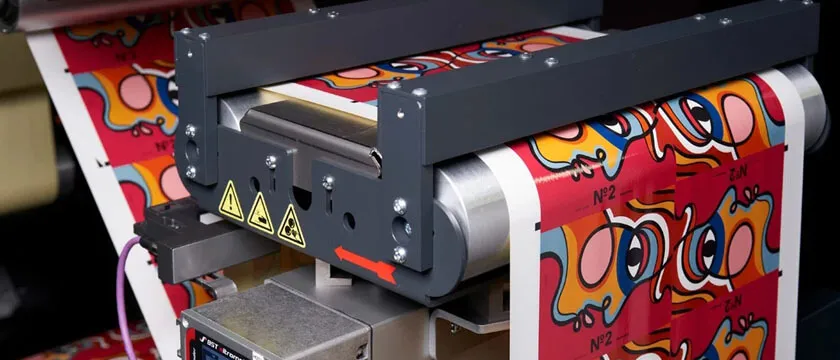
Forty years ago, Longgang was a fishing village on the mudflats of southern Zhejiang. In 1985, its first signage workshop opened in a family home; by 2002, the China Printing Technology Association awarded it the title “China’s Printing City” (中国印刷城)—the first cluster in the country to receive it. Today, Longgang is one of China’s three great printing bases, and one of the most interesting margin opportunities in packaging sourcing.
The Numbers
According to Wenzhou municipal media and the Longgang Printing & Packaging Industry Association (2025–2026 releases):
- The district’s full printing industry chain surpassed ¥50 billion in output value in 2025, roughly doubling since the town gained city status in 2019.
- 4.7万+ market entities operate in the chain, with about 150,000 workers—by the association’s local framing, one in three Longgang residents works in printing.
- Around 890 licensed printing enterprises, 200+ of them above designated size, supported by upstream material makers producing BOPP, BOPET, and specialty films locally.
- Neighboring Pingyang adds a nationally recognized packaging equipment cluster (74 above-designated-size machinery makers), making the belt self-sufficient even in machinery.
The Structural Opportunity: A Domestic-Facing Giant
Here is what most overseas buyers miss. According to the Longgang association’s 2025 survey, fewer than 20% of local factories export directly—the overwhelming majority serves domestic brands, or exports indirectly through trading companies in Ningbo, Shanghai, and Guangzhou. Industry observers call this the belt’s “case-driven” weakness: excellent product, thin export presence.
For international buyers, that gap is the opportunity. A factory that has never exported directly:
- Has no export-price inflation—quotes reflect domestic thin margins, not B2B-platform markups.
- Offers fast small-batch digital runs—Longgang’s digital print turnaround for customized packaging can be as short as 48 hours.
- Brings 40 years of craft depth in color boxes, rigid gift boxes, paper bags, and labels.
What to Source in the Belt
- Folding cartons and color boxes: The volume core, with everything from cosmetics-grade laminating to food-grade board.
- Rigid gift boxes: Premium unboxing packaging for D2C brands; local specialty-material suppliers (films, specialty papers) sit within the cluster.
- Paper bags and eco lines: A fast-growing segment as the cluster pivots to green materials.
- Labels and stickers: High-precision runs benefiting from the local film-making upstream.
Sourcing Playbook
- Bridge the export gap deliberately. Factories without export teams need clearer specs—provide dielines, Pantone codes, and INCOTERMS explicitly.
- Verify print licenses. China regulates printing; a valid 印刷经营许可证 (printing license) is a useful legitimacy filter.
- Specify materials for compliance: FSC-certified board for EU/US EPR compliance, food-contact-grade inks and coatings for food packaging.
- Pair with equipment visits in Pingyang if you’re sourcing packaging machinery alongside consumables.
When to Visit
Longgang hosts regular print industry exhibitions, and Wenzhou’s merchant networks make factory introductions efficient year-round. Two days covers 6–8 factories across carton, rigid box, and bag segments.
Ready to source packaging from Wenzhou? Explore the Wenzhou packaging cluster, browse eco-packaging suppliers and products, or Submit your RFQ to get matched with audited factories.