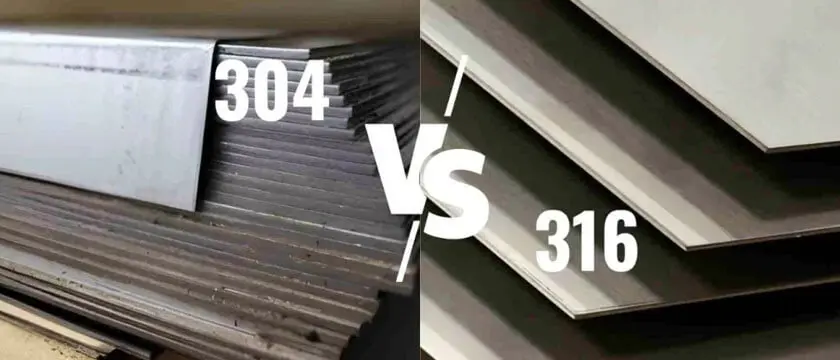
Every washdown-equipment buyer has lived the same meeting: engineering specifies 316, procurement finds 304 at half the price, and the decision stalls on chemistry nobody in the room can recite. The caster category is a near-perfect laboratory for this debate — it sells both grades side by side, in the same structures, at factory-gate prices. Our October 2026 sampling puts numbers on the table.
Price data source: publicly listed wholesale prices on mainstream B2B platforms, collected on 2026-10-18. These are reference ranges only — actual transaction prices vary significantly with order quantity and customization requirements. For full methodology, see Understanding Reference Prices.
The Grade Ladder, in Dollars
| Build | Observed Pricing | Context |
|---|---|---|
| Plated-rig economy oven casters | $5.79–8.49 | High-temp phenolic band floor ($6–28 total) |
| 304-rig casters | $5.45–10.14 | Economy stainless, multiple listings |
| 304-frame high-temp builds | ~$9.97–10 | Stainless frame entering the phenolic band |
| 316 / mixed stainless rigs | $15.90–25 | Nylon-wheel 316-class rigs |
| Heavy 316-class builds (8", 400 kg, PU/aluminum core) | $25.42–27.73 | Upper-mid washdown tier |
| Full 316 braked rigs (4") | $41.59–46.19 | The reference band ceiling |
The headline reference band for Stainless Steel 316 Washdown Casters is $15.00–46.00 per piece — and the ladder above shows the band’s own floor is set by 304-class economy builds, not by 316 at all.
What the Premium Actually Is
Put matched structures side by side and the grade premium comes into focus:
- Economy stainless (304-class rigs): $5.45–10.14
- Entry 316-class rigs: $15.90–25
That is roughly a 2–3× step at comparable duty — consistent with the raw-material reality (316’s molybdenum content) plus the tighter manufacturing tolerances washdown hardware demands. It is not the 5× nightmare procurement fears, and it is not the 30% premium an optimistic supplier quotes.
The Third Option: Mixed Builds
The most underused line in the ladder is the middle: 316-class hardware with nylon or PU/aluminum wheels at $15.90–27.73. In food plants, the corrosion battle is usually lost at the rig, raceway, and bearings — not at the wheel tread. A mixed build puts 316 where chemistry attacks and saves money where it does not. Buyers who specify “all 316, everything” routinely pay the $41–46 tier for corrosion protection they only needed at the swivel head.
Environment-First Decision Rule
- Dry warehouse, general duty: skip stainless entirely — plated or zinc rigs carry the load for less; forged-steel swivel casters run $8–105 by load class.
- Humid, washdown-adjacent, retail back-of-house: 304-class economy at $5.45–10 is usually sufficient.
- Food, pharma, chemical washdown with aggressive detergents or chlorides: 316-class — and budget the true $15.90–46 band, specifying sealed bearings and (if needed) brakes, because those two options explain most of the band’s upper half.
- Medical and instrument carts: a different product entirely — non-marking TPR twin-wheels at $1.00–9.00, where central-lock hospital-bed configurations define the ceiling.
Red Flags From the Sampling Floor
- Uniform placeholder prices. One seller’s catalog listing every caster at an identical low price ($0.70 in our sampling) is a lead-generation device, not a market signal — excluded from our bands.
- Anchor-less wide ranges. A single listing spanning $5–500 tells you nothing; tiered quotes with spec anchors are the only comparable kind.
- “Stainless” without a grade. On a purchase order, “stainless steel” is not a material specification. Write 304 or 316, and for 316 programs, ask for material certification on first articles.
Caveats
All figures are ex-factory-style listing prices excluding shipping, duties, tooling, samples, and certification. Steel markets move these bands within quarters — re-validate any figure older than two quarters before locking a program budget.
Related products: Stainless Steel 316 Washdown Casters · Non-Marking TPR Medical Twin-Wheel Casters · High-Temperature Phenolic Resin Casters
Methodology: Understanding Reference Prices on Product Pages
Ready to move from reference ranges to binding quotes? Submit an RFQ with your load, wheel material, rig grade, and environment spec — and compare written quotations against the ladder above.