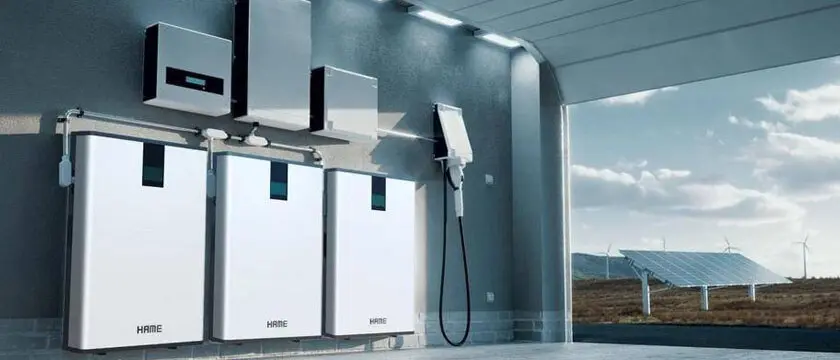
Energy storage is not one product — it is a stack. The same 10 kWh of capacity passes through a cell factory, a pack assembler, a system integrator, and a certification lab before it reaches a buyer, and each layer adds both cost and a different price-band logic.
Our October 2026 sampling put reference ranges on six products across that stack. Laid side by side, they answer three questions every storage buyer faces: what am I actually paying per kWh, what does brand-grade certification add, and where do listing prices most often mislead?
Price data source: publicly listed wholesale prices on mainstream B2B platforms, collected on 2026-10-19. These are reference ranges only — actual transaction prices vary significantly with order quantity and customization requirements. For full methodology, see Understanding Reference Prices.
The Six Bands, One Stack
| Layer | Product | Reference Range (USD) | Band Logic |
|---|---|---|---|
| Cell | 280Ah LiFePO4 Prismatic Cells | 20 – 70 / piece | Volume-tier unbranded or REPT-grade at the low end; branded Grade-A (CATL/EVE) with full traceability at the high end |
| Pack | 10kWh Wall-Mounted Home Battery | 389 – 1,550 / piece | High-volume standard 48V/51.2V 200Ah packs at the low end; low-volume premium cell grades with full certifications at the high end |
| Portable (compact) | 600W Power Station | 140 – 255 / piece | Buyer-guide band $181–255 cross-checked against a $215 listing and a $141.53 factory-direct OEM |
| Portable (large) | 2000W LiFePO4 Power Station | 350 – 1,120 / piece | Standard-capacity 2000W units at the low end; 2000Wh+ fast-charging premium models at the high end |
| Solar input | 200W Folding Solar Panel | 175 – 185 / piece | Two spec-matched listings (ETFE mono, 4-fold, MC4) agreed within $4 — a rare tight band |
| Grid interface | 800W Balcony Microinverter | 90 – 155 / piece | Standalone VDE-AR-N 4105 units; the $90 floor reflects 600W-class listings, 800W-dedicated listings sit at $142–156 |
What the Per-kWh Math Reveals
Convert the two battery bands to energy terms and the value chain becomes visible:
- A 280Ah LiFePO4 cell holds roughly 0.9 kWh (3.2V × 280Ah). At $20–70 per cell, that is ≈$22–78 per kWh, depending on whether you buy unbranded volume cells or traceable Grade-A branded stock.
- A 10kWh wall-mounted pack at $389–1,550 works out to ≈$38–155 per kWh — the same chemistry, now carrying a BMS, enclosure, wall-mount hardware, and certification burden.
The spread widening from cell to pack is the cost of integration and compliance, not margin fiction. And within each band, the same dividing line appears twice: anonymous volume stock versus named, certified, traceable product. At the cell layer it is REPT/unbranded versus CATL/EVE Grade A; at the pack layer it is standard 200Ah volume builds versus premium-grade, full-certification small lots.
Where Listing Prices Mislead
Three traps recurred throughout this batch:
- Set-vs-component confusion. Balcony solar is traded both as inverter-only and as full balcony sets (panels included, roughly $130–300). Our microinverter band is deliberately the standalone VDE-4105 unit — compare a $142–156 inverter quote against a $150–210 set quote and you are pricing two different SKUs.
- Capacity mixing inside one listing. Multi-power listings for 2000W-class power stations often anchor their low tiers at smaller-capacity units. The legitimate band for true 2000W/2000Wh-class units starts near $350; anything below should trigger a capacity-spec check.
- Retail leakage. Brand retail prices for power stations ran 2–4× above the B2B white-label bands in our rejects (several $999–1,999 retail anchors versus $350–1,120 wholesale tiers). Retail numbers on a sourcing spreadsheet poison the benchmark.
The One Tight Band — and Why It Matters
The 200W folding panel is the outlier of the batch: two independent platform listings, identical spec (ETFE monocrystalline, 4-fold, MC4), prices $178.62–180.98 and $182.48 — within $4 of each other. When a category’s spec vocabulary is precise and the listings are truly comparable, B2B prices converge. The implication cuts both ways: in spec-mature products, quotes far outside a tight band deserve immediate scrutiny — and in spec-loose products (which is most of this stack), the band stays wide no matter how many listings you sample.
Timing: The Most Volatile Batch We Track
Energy-storage prices track the lithium-carbonate cycle, and the 2025–2026 cell price decline materially shifted these bands. Of all 28 categories in our collection, this one has the shortest shelf life: treat any figure here older than ~3 months as stale, and re-anchor before quoting your own customers.
Buying Guidance by Layer
- Cell sourcing: specify brand, grade, and traceability requirements explicitly; the $20–70 band is entirely a question of which side of that line you land on.
- Pack/system sourcing: certifications (and which markets they cover) belong in the RFQ, not the footnotes — they explain most of the $389–1,550 spread.
- Portable power: separate capacity tiers before comparing; “2000W” describes output, not storage.
- Grid hardware: always state standalone vs set composition, and name the certification regime (e.g., VDE-AR-N 4105) in writing.
Caveats
All figures are ex-factory-style listing prices excluding shipping, duties, tooling, samples, and third-party certification testing.
Related products: 10kWh Wall-Mounted Home Batteries · 280Ah LiFePO4 Prismatic Cells · 800W Balcony Solar Microinverters
Methodology: Understanding Reference Prices on Product Pages
Ready to move from reference ranges to binding quotes? Submit an RFQ with your target layer, capacity, cell grade, and certification requirements — and compare written quotations against the bands above.