Product Overview
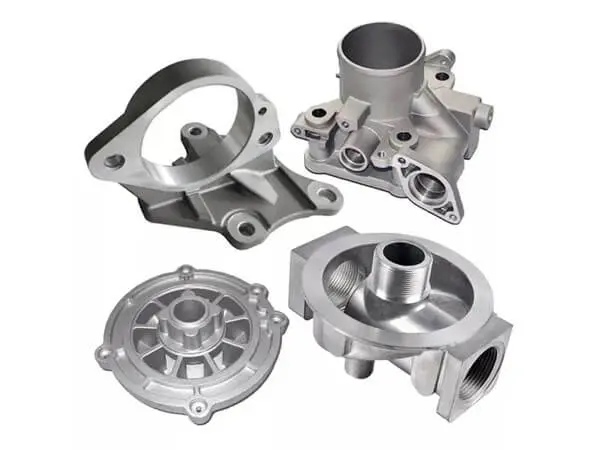
Aluminum die-casting is the dominant production method for engine brackets, transmission housings, oil pans, and EV motor enclosures, replacing iron castings to cut weight 40–60%. The difference between a commodity caster and an automotive-grade supplier lies in porosity control—X-ray sampling, controlled melt chemistry, and vacuum-assisted casting for pressure-tight parts. Ningbo cluster factories in this tier run 280T to 2000T HPDC cells with robotic extraction, in-house CNC finishing, and air-decay leak testing, supplying both aftermarket housings and OEM tier-2 brackets with full material traceability.
Tooling amortization is the key commercial variable: dedicated molds for proprietary designs typically pay back within 20,000-50,000 units, after which unit economics outperform any machined alternative by 3-5x.
PPAP documentation depth should be priced as a line item: full Level 3 packages add 8-12% to unit cost but unlock OEM tier-1 and tier-2 contracts inaccessible to commodity casters.
OEM & Customization Capabilities
- Alloy Selection – ADC12 for general castings, A380 for higher-strength applications, or custom alloy recipes developed and validated with your engineering team.
- Surface & Finish – Shot blasting, vibratory finishing, anodizing, e-coating, or powder coating coordinated in-house or through audited local partners.
- Validation Level – Choose documentation depth from basic dimensional reports to full PPAP Level 3 with X-ray porosity mapping and SPC data for safety-critical parts.