Product Overview
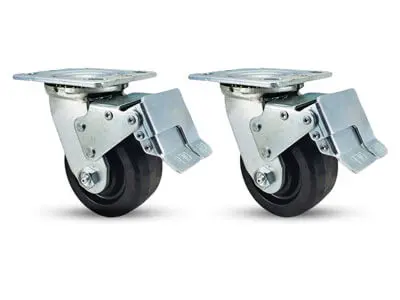
Hospital casters do three jobs at once: carry diagnostic equipment and beds without marking corridor floors, roll quietly past patients, and lock positively enough that a loaded bed does not wander during procedures. Twin-wheel designs achieve high load capacity at low mounting height — the format that keeps equipment centers of gravity low — while the TPR tread (60–85 Shore A) grips without marking, absorbs vibration and tolerates repeated disinfectant wiping. Brake systems are specified by function rather than just “brake”: directional locks keep carts tracking straight down corridors, total locks freeze both wheel and swivel for stationary work, and central-lock systems let one pedal lock an entire bed’s caster set. Load ratings in the common 75–125 mm sizes run roughly 80–150 kg per caster. Manufacturers listed here build to medical OEM drawings including stem and plate variations, color coding, and clean-room-compatible lubrication.
Brake-function specification should match the device risk assessment: total locks, directional locks and central-lock systems serve different clinical scenarios, and buyers should lock brake-logic definitions into the device drawing with per-unit functional test records, since brake-related equipment drift triggers the most serious hospital complaints.
OEM & Customization Capabilities
- OEM Integration – custom stems, top plates, mounting heights and pedal positions per equipment drawing.
- Brake Logic – central, directional and total-lock systems selected per device risk assessment.
- Clean-Room Options – low-outgassing lubricants and stainless hardware for critical care environments.
Industry Applications
- Heavy-Duty Casters
- Medical & Hospital Equipment